
From Crowds to Clients: Using VR to Draw Relevant Visitors at Trade Shows
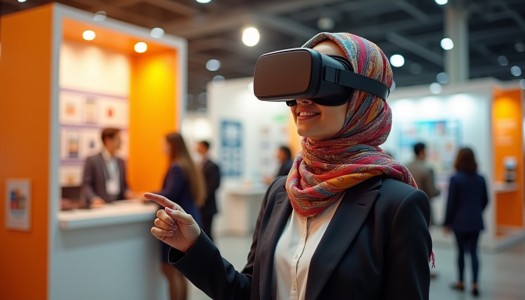
Trade shows are high-stakes environments. They are bustling, noisy, and crowded with hundreds of companies all competing for the attention of the same pool of prospects. For businesses, the challenge is not just to attract visitors, but to attract the right visitors—the ones who are genuinely interested in your solutions and have the authority to make buying decisions. Traditional methods—banners, brochures, giveaways—often fail to create meaningful differentiation.
This is where Virtual Reality (VR) steps in. A well-designed VR experience doesn’t just grab attention; it holds it, engages it, and filters it. By transporting visitors into immersive, relevant scenarios, VR can help businesses draw in the right audience and leave them with a memorable brand experience.
In this article, we’ll explore why VR is becoming a powerful tool for trade shows, how it can be used to attract relevant visitors, examples of VR in action, and strategies to make your investment in VR pay off.
Why Trade Shows Are a Battlefield for Attention
Walk into any large trade show, and you’ll notice a few patterns:
-
Rows of booths vying for attention with flashy signage.
-
Staff waving brochures or inviting people to “come learn more.”
-
Freebies like pens, tote bags, and chocolates stacked on tables.
While these methods may attract some foot traffic, they don’t guarantee relevance. Most attendees wander through booths casually collecting freebies rather than genuinely engaging with solutions. Even if someone pauses at your booth, they may not be the right fit for your business.
The real challenge is quality over quantity. A booth crowded with people is good optics, but if none of them are decision-makers or potential customers, your ROI diminishes. VR offers a way to change that dynamic.
The Unique Power of VR in Trade Shows
VR stands apart from other booth gimmicks because it offers:
-
Immersion – Unlike passive displays, VR demands full attention. Once someone puts on a headset, they are cut off from the distractions of the trade show floor and immersed in your story.
-
Interactivity – Prospects don’t just watch—they participate. They can explore a product, walk through a process, or test a scenario.
-
Emotional Connection – Experiences create stronger memories than brochures. VR leaves visitors with a “wow factor” that makes your brand stand out.
-
Relevance Filter – Not every visitor will line up to try VR. The ones who do are usually curious, tech-savvy, and open to innovation—often aligning with the ideal profile of decision-makers or early adopters.
-
Scalability of Storytelling – VR lets you explain complex products, processes, or solutions in minutes, without needing massive setups or lengthy conversations.
Together, these elements make VR a magnet for relevant visitors at trade shows.
How VR Attracts Relevant Visitors
1. By Demonstrating Products Too Big or Complex for the Booth
Many industries—manufacturing, energy, construction, healthcare—struggle to showcase their offerings at trade shows because their products are:
-
Too large to transport (industrial machinery, vehicles).
-
Too complex to explain (multi-stage manufacturing processes).
-
Too risky or dangerous to demonstrate (chemical equipment, heavy tools).
VR solves this. A prospect can explore a machine from all angles, see how it works internally, and even simulate usage. This naturally attracts visitors who need to understand such solutions, filtering out casual browsers.
2. By Turning Abstract Solutions Into Tangible Experiences
Some companies sell solutions that are invisible or abstract—like software platforms, logistics systems, or cloud infrastructure. These are notoriously hard to explain at trade shows.
With VR, you can take prospects on a journey:
-
Show them how data moves through your system.
-
Place them inside a logistics hub to see optimization in action.
-
Let them visualize time and cost savings through simulated scenarios.
Only genuinely interested prospects will engage with such experiences, making your booth a magnet for qualified visitors.
3. By Creating Personalized, Relevant Experiences
VR allows customization. Visitors can choose paths that align with their role or needs. For example:
-
A buyer from procurement can explore cost benefits.
-
A technical specialist can dive into engineering details.
-
A CEO can experience the big-picture impact.
This personalization attracts the right visitors because the experience speaks directly to their priorities.
4. By Standing Out in a Sea of Sameness
Trade show floors can blur into monotony—similar-looking stalls, similar pitches. A VR headset immediately signals innovation. Visitors who value cutting-edge solutions (and are more likely to be decision-makers) are drawn to such experiences.
5. By Generating Buzz That Pulls in Relevant Traffic
When a few people at your booth are visibly immersed in VR—turning, pointing, reacting with “wow”—others take notice. Word spreads. Soon, more of the right kind of visitors want to see what’s creating the buzz.
Strategies to Maximize VR’s Impact at Trade Shows
If you’re considering VR for your next trade show, here are strategies to ensure it attracts the right audience:
1. Align VR Content with Business Objectives
Don’t create VR just for the “wow.” Make sure the experience tells your business story, showcases your USP, and highlights solutions relevant to your target audience.
2. Design for Short, Impactful Experiences
Trade show visitors have limited time. Keep VR sessions between 3–5 minutes. Enough to impress, but not so long that lines become discouraging.
3. Train Staff to Pre-Qualify Participants
Not every visitor needs to try the VR experience. Train booth staff to identify and prioritize high-value prospects before inviting them into VR. This ensures your headsets are used by the right people.
4. Integrate VR with Lead Capture
Combine VR with digital lead capture tools. For example, visitors can register before experiencing VR, giving you valuable data about who is most engaged.
5. Use VR as a Conversation Starter
VR should not replace human interaction. After the experience, staff should engage visitors in conversations that connect the virtual story to real-world benefits.
6. Promote VR Before and During the Show
Use email campaigns, LinkedIn posts, and event apps to announce your VR demo ahead of the show. On-site, use screens to project what VR users are seeing—attracting more relevant prospects.
Measuring the ROI of VR at Trade Shows
To justify investment, track metrics such as:
-
Number of qualified leads generated from VR participants.
-
Average engagement time vs. traditional booth visitors.
-
Post-event follow-ups and conversion rates from VR leads.
-
Brand recall in post-event surveys.
Often, the ROI is not just in immediate leads but in long-term brand differentiation. A memorable VR experience keeps your brand in prospects’ minds long after the show ends.
Challenges and Considerations
While VR offers huge potential, companies must address:
-
Cost of Development – High-quality VR experiences require investment.
-
Hardware Logistics – Managing headsets, hygiene (sanitization), and staff training.
-
Content Relevance – Poorly designed VR that doesn’t tie to business goals can become a gimmick.
However, with careful planning, these challenges are outweighed by the benefits.
In the crowded arena of trade shows, the battle is not just for attention but for relevant attention. Virtual Reality offers a powerful solution—cutting through the noise, filtering out casual browsers, and engaging decision-makers with immersive, memorable experiences.
Whether you’re demonstrating complex products, visualizing abstract solutions, or showcasing innovation, VR transforms your booth into a destination for the right visitors. Done well, it not only attracts qualified leads but leaves them with a lasting impression that brochures, banners, or freebies could never achieve.
For businesses seeking meaningful ROI from trade shows, VR is no longer just an option—it’s a competitive advantage.
Share This Story, Choose Your Platform!
LISTEN NOW

CAPTIVATING READS