
Challenges in Creating Photorealistic Experiences in VR – and How to Overcome Them
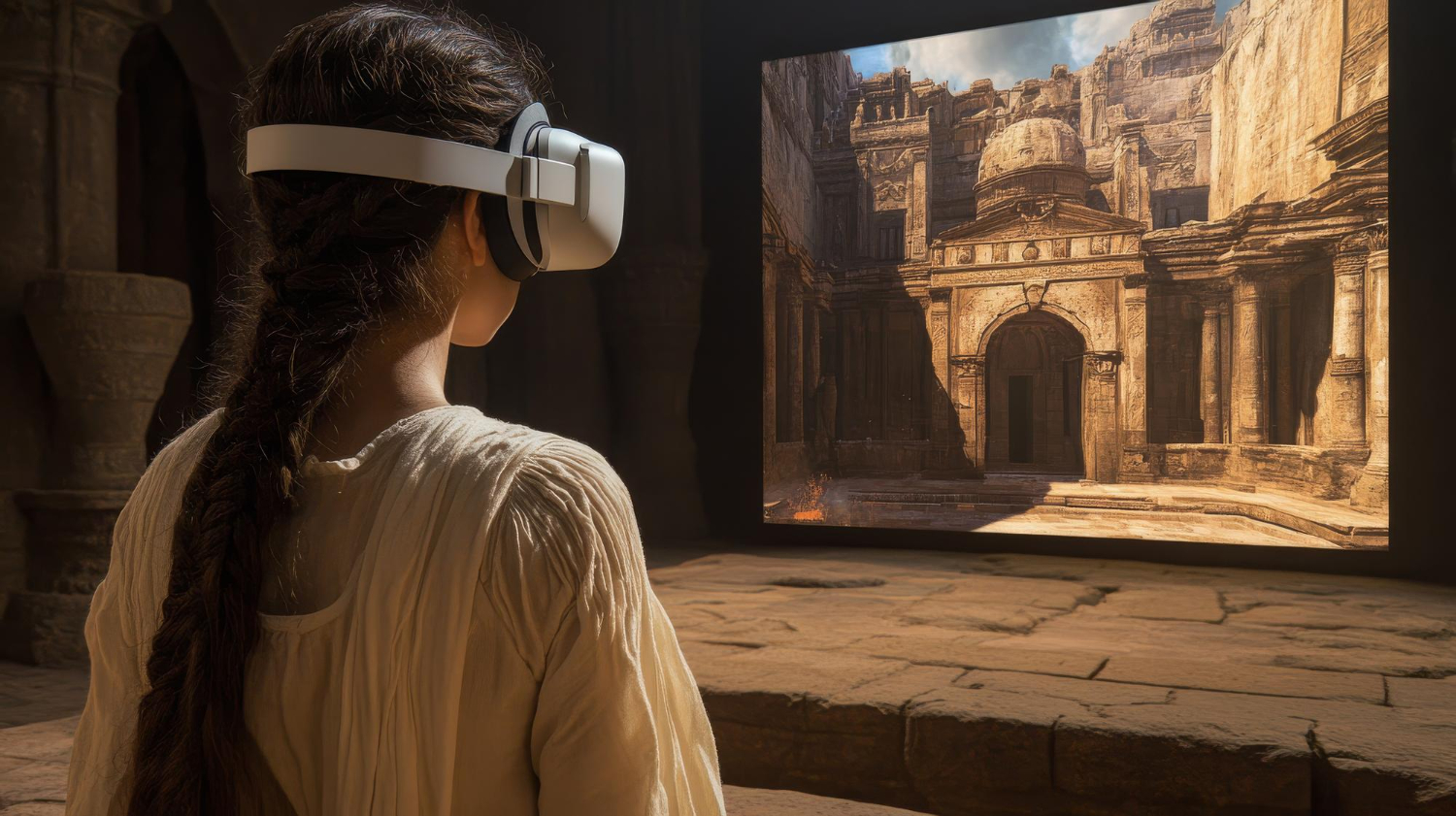
Virtual Reality has made remarkable strides in the last decade. From gaming and entertainment to corporate training, healthcare, real estate, and tourism, VR is being adopted across industries. Yet, when users put on a headset, one question determines how effective the experience is: Does it feel real?
Photorealism in VR is the holy grail of immersion. When digital environments look, sound, and behave exactly like the real world, users forget they are inside a simulation. But creating such experiences is far from simple. Developers face multiple challenges—technical, artistic, and experiential.
Let’s explore some key challenges in creating photorealistic VR and discuss practical strategies to overcome them, so that creators can deliver virtual worlds that truly blur the line between reality and simulation.
1. Balancing Visual Fidelity with Performance
The Challenge
Photorealism often requires high-resolution textures, complex 3D models, realistic lighting, and dynamic effects. But VR systems have strict performance requirements. Unlike flat-screen games that can run at 30 or 60 FPS, VR demands a minimum of 72–90 FPS to avoid motion sickness and maintain immersion.
The more realistic the assets, the heavier the rendering load—and the greater the risk of lag, stutter, or frame drops.
The Solution
-
Level of Detail (LOD): Use multiple versions of 3D models, where simpler versions load at a distance and detailed ones load up close.
-
Foveated Rendering: Render high-quality visuals only in the user’s focus area, with lower detail in peripheral vision.
-
Texture Streaming: Load textures dynamically based on user position and field of view.
-
Optimization Workflows: Retopology, normal maps, and efficient polygon budgets help maintain realism without overloading hardware.
By prioritizing efficiency alongside fidelity, developers can keep experiences smooth while still appearing lifelike.
2. Lighting and Shadows
The Challenge
Lighting is arguably the biggest determinant of realism. Real-world lighting is complex—sunlight diffuses differently than artificial light, shadows have varying softness, and reflections change with angle. Simulating all this in real time is computationally expensive.
Flat lighting or inaccurate shadows can instantly break immersion, no matter how detailed the models are.
The Solution
-
Hybrid Lighting Systems: Combine pre-baked global illumination (for static environments) with dynamic lights (for interactive elements).
-
Reflection Probes and SSR: Use reflection captures strategically to simulate accurate reflections without real-time ray tracing.
-
Real-Time Ray Tracing (Where Possible): With modern GPUs, real-time ray tracing is becoming more practical for accurate lighting and reflections.
-
Light Artistry: Sometimes photorealism is less about raw computation and more about clever design. Lighting artists can exaggerate or soften certain effects to make a scene feel more natural.
3. Creating Realistic Textures and Materials
The Challenge
Surfaces in the real world have microscopic imperfections—scratches on metal, fingerprints on glass, cracks on concrete. Without these details, textures in VR can look sterile or artificial. But ultra-high-resolution textures (4K–8K) quickly balloon file sizes and strain hardware.
The Solution
-
Physically Based Rendering (PBR): Simulate how real materials reflect and absorb light for authenticity.
-
Procedural Textures: Use procedural generation to create infinite variations of natural surfaces like stone, wood, or fabric.
-
Smart UV Mapping: Optimize how textures are applied to models, reducing wasted space and memory.
-
Imperfections and Variations: Add small imperfections—like dust, smudges, or wear—to break uniformity and mimic real-world randomness.
The goal is to make environments feel “lived in,” not computer-generated.
4. Scale and Proportions
The Challenge
Human perception is highly sensitive to scale. Even slight inaccuracies in the size of a door, a chair, or a human figure can make an environment feel “off.” Unlike games on screens, VR immerses users in full-scale 3D space, making incorrect proportions even more jarring.
The Solution
-
Real-World Measurements: Base models on accurate measurements and references.
-
Photogrammetry and LiDAR: Use scanning technologies to capture real-world dimensions.
-
User Testing: Conduct VR walkthroughs to validate if objects “feel right” in scale compared to the human body.
Getting proportions correct ensures users feel naturally situated in the virtual world.
5. Realistic Physics and Interaction
The Challenge
Even if visuals are photorealistic, unrealistic interactions can break immersion. A ball that doesn’t bounce, a door that swings unnaturally, or an object that feels weightless all signal to the brain that the environment is fake.
The Solution
-
Physics Engines: Integrate real-time physics for accurate gravity, collisions, and momentum.
-
Inverse Kinematics (IK): Ensure avatars move naturally in response to user actions.
-
Haptics: Provide tactile feedback where possible, enhancing the illusion of physicality.
-
Consistency: Every interactive element should behave predictably. If some objects can be picked up and others cannot, the experience should communicate why.
6. Audio Realism
The Challenge
Many VR developers focus heavily on visuals but overlook sound. Yet audio is half of the immersive equation. Flat, mono soundscapes or mismatched audio cues can feel disorienting.
The Solution
-
Spatial Audio: Implement 3D audio so that sounds originate from the correct direction and distance.
-
Environmental Ambience: Add subtle background sounds—wind, birds, machinery—that give spaces a “living” quality.
-
Interaction Sounds: Every action (like footsteps or object handling) should have realistic audio feedback.
-
Dynamic Soundscapes: Sound should change based on environment—echoes in a cave, muffling in a carpeted room, etc.
When sound matches visuals, the sense of realism multiplies.
7. Hardware Limitations
The Challenge
Not all users have access to high-end VR systems. Photorealistic experiences that run smoothly on powerful PCs may struggle on standalone headsets like the Meta Quest. Developers face the dilemma of creating cutting-edge realism while maintaining accessibility.
The Solution
-
Scalable Graphics Settings: Offer multiple visual quality modes for different hardware levels.
-
Cloud Rendering: Stream high-quality visuals from powerful servers to lightweight headsets.
-
Asset Streaming: Load assets dynamically rather than all at once, reducing local resource demand.
-
Smart Design Choices: Prioritize photorealism where users focus most, while simplifying background details.
8. Production Costs and Time
The Challenge
Photorealism is resource-intensive. High-quality 3D models, textures, lighting, and interactivity require skilled artists, advanced software, and long development cycles. For many organizations, the cost of producing photorealistic VR can be prohibitive.
The Solution
-
Photogrammetry & Scanning: Reduce manual modeling time by capturing real-world assets.
-
Asset Libraries: Use existing libraries (e.g., Quixel Megascans) for high-quality, ready-to-use assets.
-
Modular Design: Reuse models and environments across different projects.
-
AI Tools: Leverage AI-based upscaling and asset generation to reduce manual workload.
Efficiency in production pipelines helps control costs without compromising quality.
9. User Comfort and Presence
The Challenge
Even a visually perfect VR environment can fail if users feel uncomfortable. Issues like motion sickness, unnatural field of view, or disorientation break immersion. Photorealism must go hand-in-hand with user comfort.
The Solution
-
Maintain High Frame Rates: Aim for 90 FPS or higher to reduce nausea.
-
Natural Locomotion: Use teleportation or smooth motion options that minimize discomfort.
-
Ergonomic Design: Ensure objects and environments align with human reach and posture.
-
Testing Across Demographics: Different users have different tolerance levels; broad testing ensures inclusivity.
10. Future Opportunities to Overcome Challenges
While current limitations pose hurdles, emerging technologies are paving the way toward seamless photorealism:
-
Real-Time Ray Tracing: Becoming more efficient for VR lighting.
-
AI-Powered Rendering: Neural networks can upscale textures and fill details intelligently.
-
Procedural World Generation: Automates the creation of vast, realistic landscapes.
-
Cloud-Based VR: Eliminates the need for high-end local hardware.
-
Mixed Reality (MR): Integration of real-world and virtual elements adds layers of believability.
The future will bring tools that make photorealism faster, cheaper, and more accessible.
The pursuit of photorealism is not just about making VR look beautiful. It’s about making it believable—so that users can step into a virtual space and truly feel present. As technology continues to evolve, photorealistic VR will move from being an ambitious goal to an everyday standard, transforming industries and redefining digital experiences.
Share This Story, Choose Your Platform!
LISTEN NOW

CAPTIVATING READS