
Onboarding Sales Teams Anywhere, Anytime – with VR
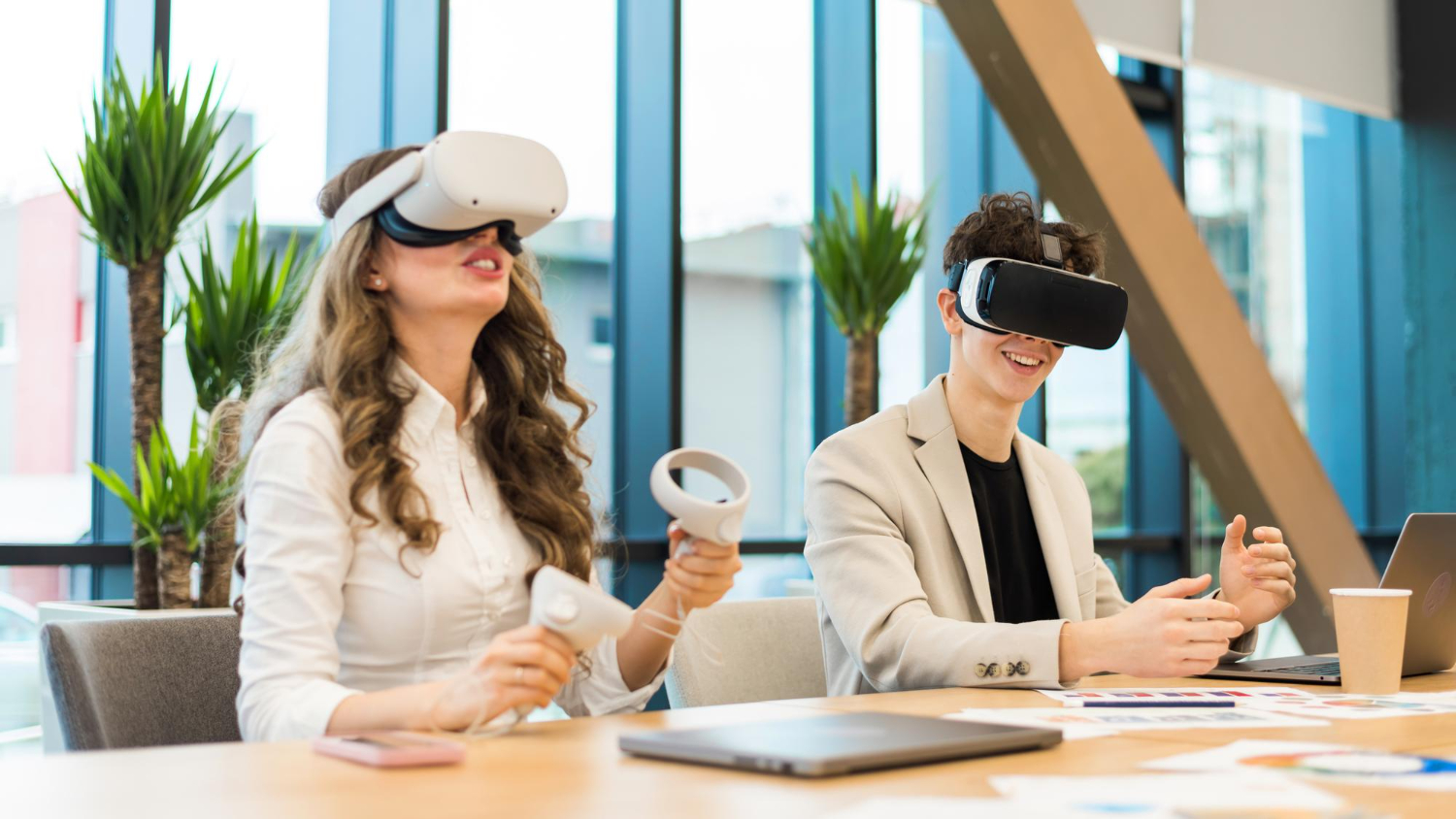
Inducting new sales team members effectively has always been a critical factor in driving business success. An efficient induction program not only equips new hires with product knowledge, company values, and sales processes, but also helps them feel connected to the larger organizational culture.
However, when organizations have sales teams spread across multiple cities, regions, or even countries, traditional induction methods—such as centralized classroom sessions or trainer-led workshops—face several challenges: high travel costs, inconsistency in delivery, scheduling delays, and varying engagement levels.
This is where Virtual Reality (VR) can transform the way sales induction is conducted. By creating immersive, standardized, and engaging learning experiences, VR allows organizations to onboard salespeople at scale, regardless of their location.
Let’s explore how VR can be used to induct sales teams across various locations, the benefits it brings, and practical steps to implement it.
The Challenges of Multi-location Sales Induction
Before diving into the VR solution, it’s worth understanding the common obstacles organizations face when inducting geographically dispersed sales teams:
- Consistency in Training Delivery
Different trainers, regions, and schedules often lead to uneven quality of induction. Some teams may get in-depth sessions, while others may only receive surface-level exposure. - High Costs
Flying trainers to different regions, arranging venues, and managing logistics add up quickly, making traditional induction an expensive affair. - Time Constraints
Sales teams need to hit the ground running. Traditional induction programs can stretch over weeks, delaying productivity. - Engagement Issues
PowerPoint-heavy classroom sessions or video calls fail to capture attention and often result in low knowledge retention. - Limited Hands-on Experience
Salespeople need to practice pitching, handling objections, and understanding customer personas. These skills are difficult to build through lectures or static e-learning modules.
VR addresses each of these challenges head-on.
Why VR is Ideal for Sales Induction
Virtual Reality brings learning to life by simulating real-world environments in a safe and controlled way. Instead of passively listening to a trainer, new sales hires can experience the company, products, and customer interactions in an immersive format.
Here’s why VR stands out:
- Immersive Learning – VR creates a sense of presence, where learners feel like they are actually inside a real sales scenario or company setting.
- Standardization – Every new hire gets the same induction experience, no matter where they are located.
- Scalability – Once developed, VR modules can be deployed across locations without recurring trainer costs.
- Engagement – Interactive storytelling, gamification, and simulations keep learners hooked and motivated.
- Practical Skill-building – VR enables practice of sales pitches, negotiation, and customer handling without the risk of making mistakes in front of real clients.
How to Use VR for Sales Induction Across Locations
- Introduce the Company Culture and Values
One of the first goals of induction is to connect new hires with the company’s purpose and culture. VR can take them on a virtual office tour, allowing them to explore headquarters, meet leadership avatars, and listen to company values narrated in an immersive environment.
Instead of reading about the company mission on a slide, sales hires can walk through a visually rich journey of the company’s history, achievements, and customer impact. This builds emotional connection and pride from day one.
- Product Training Through 3D Demonstrations
Sales professionals need a strong grasp of product features, benefits, and use cases. With VR:
-
- They can interact with 3D product models, rotate them, and explore inner components.
- For intangible solutions (like software or financial products), VR can visualize processes and customer journeys in ways that are easier to understand than text-heavy explanations.
- Complex products, like machinery or medical devices, can be broken down into step-by-step learning sequences.
This approach ensures uniform product understanding across all sales recruits, regardless of location.
- Simulated Customer Interactions
One of the biggest advantages of VR in sales induction is the ability to simulate real customer scenarios.
-
- Role-plays with Virtual Customers: New hires can engage in realistic conversations with AI-powered avatars representing different customer personas—skeptical buyers, enthusiastic prospects, or price-sensitive clients.
- Objection Handling Practice: Salespeople can face typical objections in a safe environment and learn to respond effectively.
- Personalized Feedback: The system can track tone, word choice, and confidence levels, giving actionable feedback.
This kind of experiential learning builds confidence and accelerates readiness for real-world selling.
- Gamified Learning Modules
Gamification enhances motivation and retention. Organizations can design VR-based gamified modules where sales hires:
-
- Earn points for successfully completing customer meetings.
- Unlock new levels after mastering product features.
- Compete in friendly challenges with peers across locations.
Such interactive formats drive healthy competition, encourage active participation, and ensure higher knowledge retention compared to static training.
- Sales Process Walkthroughs
Every company has its own unique sales process—from lead generation to closing deals. VR can help new hires visualize and practice this process step by step:
-
- Exploring virtual dashboards that explain CRM usage.
- Navigating the sales funnel visually to understand what happens at each stage.
- Shadowing a top-performing salesperson in a simulated environment.
This brings clarity to processes that might otherwise be explained in a dry, theoretical manner.
- Remote Collaboration and Team Building
One challenge of multi-location teams is the lack of connection with peers. VR solves this by creating virtual meeting rooms and collaborative experiences:
-
- New hires can interact with fellow recruits in a shared VR space.
- Team-building exercises, like solving puzzles or group sales simulations, foster bonding.
- Senior leaders can address new teams virtually, creating inclusiveness without travel.
This helps build camaraderie and a sense of belonging across dispersed sales teams.
Implementing VR Sales Induction: Practical Steps
- Start with Pilot Programs
Instead of revamping the entire induction at once, begin with a pilot—like a VR module on product training or objection handling—and test adoption across one region. - Blend VR with Existing Formats
VR should complement, not completely replace, traditional methods. Combine VR with microlearning videos, live Q&A sessions, and digital resources for a holistic program. - Leverage Portable VR Headsets
Affordable, lightweight standalone VR headsets (like Meta Quest or Pico) can be shipped to regional offices. Alternatively, VR modules can be made compatible with smartphones based budget-friendly headsets like google cardboard or Irusu Monster. - Track Progress Through Analytics
Most VR training solutions provide detailed analytics on participation, time spent, accuracy in simulations, and performance in scenarios. These insights can guide continuous improvement. - Ensure Content Localization
For global or pan-regional sales teams, local language support and culturally relevant examples should be built into VR modules.
Benefits Organizations Can Expect
- Faster Time-to-Productivity – Sales hires become client-ready in days rather than weeks.
- Reduced Training Costs – Once built, VR content can be reused across multiple locations.
- Higher Engagement and Retention – Immersive, interactive learning ensures knowledge sticks.
- Consistent Learning Outcomes – Every salesperson, irrespective of geography, gets the same high-quality induction.
- Improved Sales Performance – Confident, well-prepared sales reps translate into better customer experiences and higher conversions.
The Future of Sales Induction with VR
As VR technology becomes more affordable and AI-powered simulations grow more sophisticated, the use of VR for sales induction will only expand. In the near future, sales teams may experience hyper-personalized VR onboarding, where modules adapt to each recruit’s learning style, skill gaps, and role-specific requirements.
Organizations that embrace this technology early will gain a competitive edge—not just by saving costs, but by building sales teams that are engaged, skilled, and aligned with company goals right from the start.
Share This Story, Choose Your Platform!
LISTEN NOW

CAPTIVATING READS