
VR vs Metaverse for Corporate Training: What’s the Difference and Which One Should You Choose?
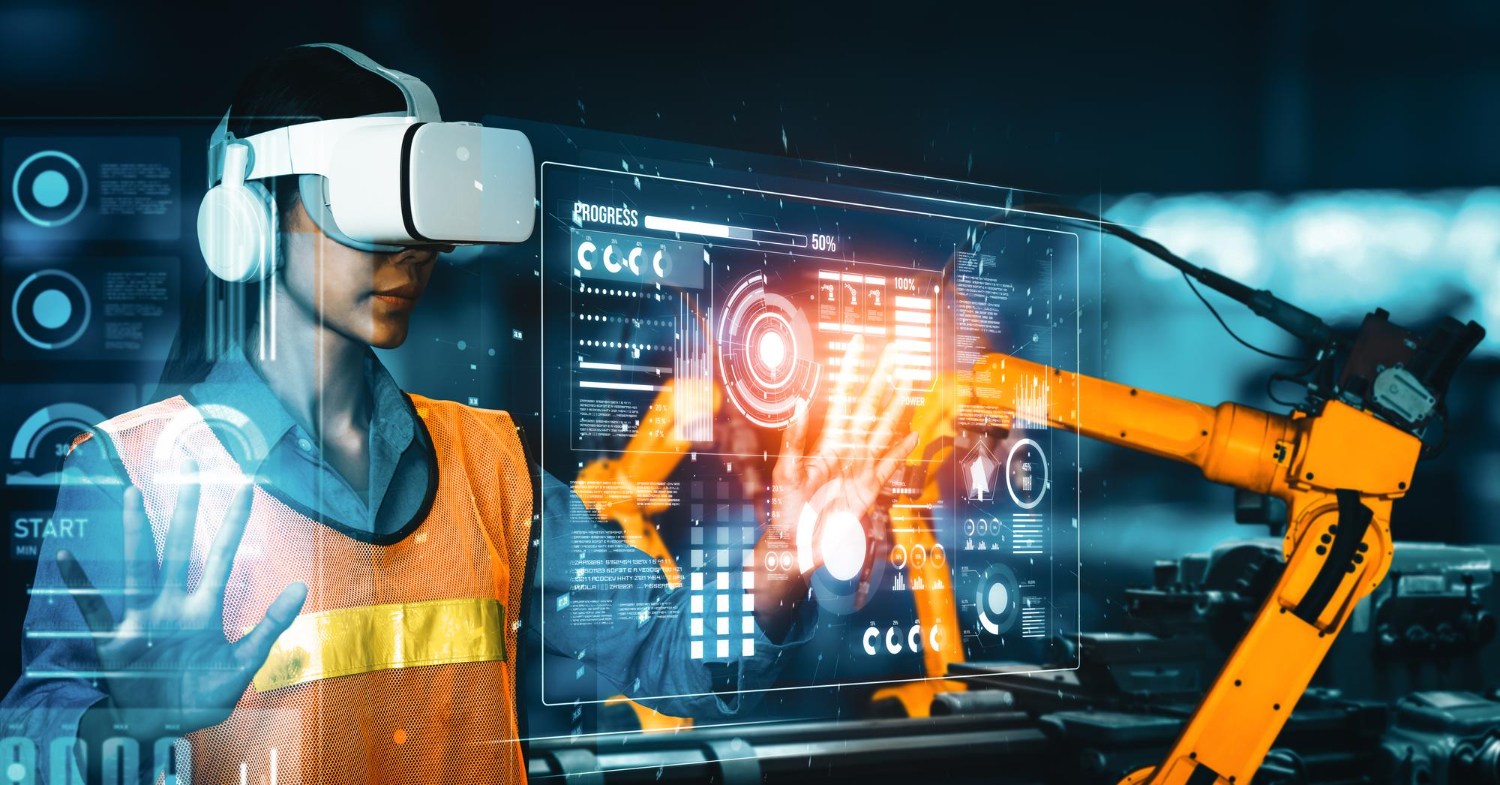
In recent years, immersive technologies have begun to reshape the way companies approach employee learning and development. Among the most talked-about are Virtual Reality (VR) and the Metaverse. Both offer powerful ways to engage learners, but they are not the same. Understanding the distinction is crucial for organizations planning to adopt these technologies for training.
Virtual Reality: Immersive Training Experiences
Virtual Reality is a technology that creates a fully simulated environment using headsets and sometimes motion controllers. In corporate training, VR allows employees to practice real-world scenarios in a safe, controlled environment. For example:
- A manufacturing company can train workers to operate heavy machinery without any safety risks.
- Sales professionals can practice negotiation or client interactions in realistic simulations.
- Compliance training, such as overcoming gender bias or insider trading awareness, can be made more engaging through scenario-based VR modules.
The biggest advantage of VR is its ability to replicate real-world tasks with high accuracy. Learners are fully immersed, which improves focus, retention, and confidence. Moreover, VR modules are self-contained—once built, they don’t require an online world or social interaction unless deliberately designed into the program.
However, VR has limitations. It often requires specialized hardware, and the experience is generally isolated. While perfect for roleplays or task-based training, it is less effective for collaboration at scale.
The Metaverse: A Shared Virtual World
The Metaverse is a broader concept—essentially a persistent, shared digital environment where users, represented by avatars, can interact, work, and learn together. Unlike VR, the Metaverse is not a single technology but a convergence of VR, 3D worlds, and social platforms.
For corporate training, the Metaverse can transform how organizations deliver collaborative learning:
- Global teams can attend virtual classrooms, conferences, or townhalls.
- Onboarding programs can take new hires on immersive company tours, guided by mentors in real-time.
- Soft skills, such as teamwork, leadership, and communication, can be practiced in real-time group simulations.
The Metaverse emphasizes social learning—employees not only interact with content but also with each other, building a sense of presence and connection that traditional e-learning lacks.
Still, the Metaverse comes with challenges. It is more complex to build, often requiring a combination of platforms, high-speed internet, and interoperability across systems. Data security and privacy are also critical concerns when multiple users interact in a shared space.
VR vs Metaverse: Which One to Choose?
The decision depends on the training goals.
- If the objective is hands-on practice of specific skills—such as machine operation, medical procedures, or safety drills—VR is the clear choice. Its strength lies in focused, high-fidelity simulations.
- If the goal is collaboration, networking, or culture-building, the Metaverse provides unmatched opportunities for immersive group learning and social interaction.
In many cases, organizations will not need to choose one over the other. Instead, a blended approach can be most effective: VR for individual skill mastery, and the Metaverse for collaborative experiences.
VR vs Metaverse: A Comparison for Corporate Training
| Aspect | VR Training | Metaverse Training |
|---|---|---|
| Focus | Individual skill development through simulations | Collaborative, social, and continuous learning ecosystems |
| Technology Required | VR headset, controllers, VR-enabled apps | VR/AR devices, laptops, internet connectivity, digital platforms |
| Use Cases | Safety training, technical skills, role-play scenarios, equipment handling, simulations | Onboarding, leadership programs, cross-border team training, cultural immersion |
| Learning Mode | Session-based (specific modules/simulations) | Ongoing, community-driven, multi-user experiences |
| Scalability | Limited by devices and licenses | Potentially limitless through persistent worlds |
| Cost Factor | Initial investment in VR headsets and content | Higher initial setup (custom metaverse platforms, digital assets) but scalable |
| Engagement Style | Immersion and practice | Interaction, collaboration, and shared experiences |
The Future: VR, Metaverse, or Both?
The real future of corporate training may not be VR vs Metaverse but rather VR within the Metaverse.
Here’s how they could work together:
- VR can provide intense, focused skill simulations.
- The Metaverse can act as the social and collaborative layer where these simulations are embedded into larger learning journeys.
For instance, an employee could first practice a safety drill in VR and then attend a debriefing session in the Metaverse with peers and instructors. Similarly, sales reps could train in VR role-plays and then discuss strategies in a Metaverse classroom.
Both VR and the Metaverse represent the future of corporate training, but they serve different purposes. VR delivers deep, task-specific learning in controlled environments, while the Metaverse creates interactive, social, and scalable training ecosystems.
Share This Story, Choose Your Platform!
LISTEN NOW

CAPTIVATING READS